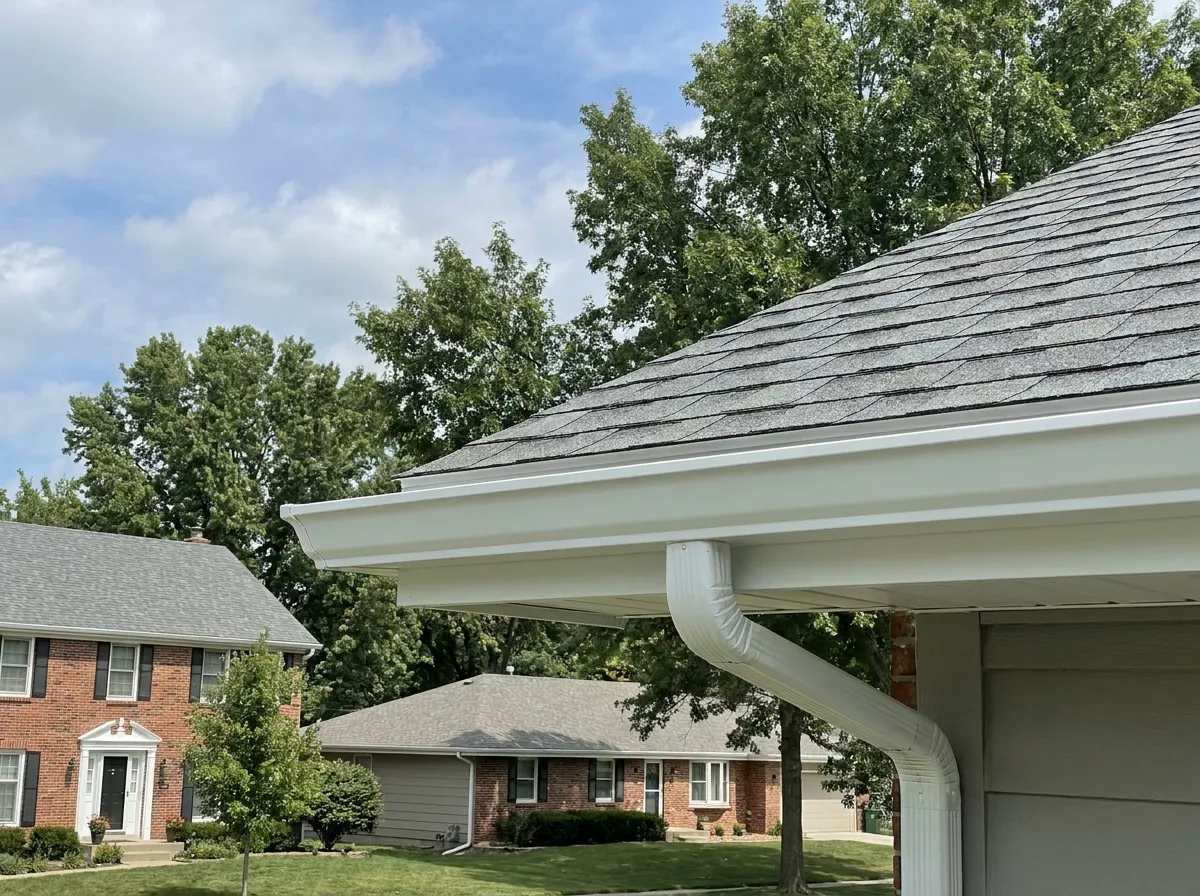
Why gutters matter in Omaha
May and August are Omaha's wettest months, and winter snow melts and refreezes on and off. Without gutters and downspouts doing their job, that water tends to find the foundation, the fascia or the soil right next to the house.
Omaha's building code is direct on this: when a roof drains over its edges, gutters and downspouts that are adequately sized, pitched and supported have to carry the water to the ground. That is not optional.
What Omaha's code says about where the water goes
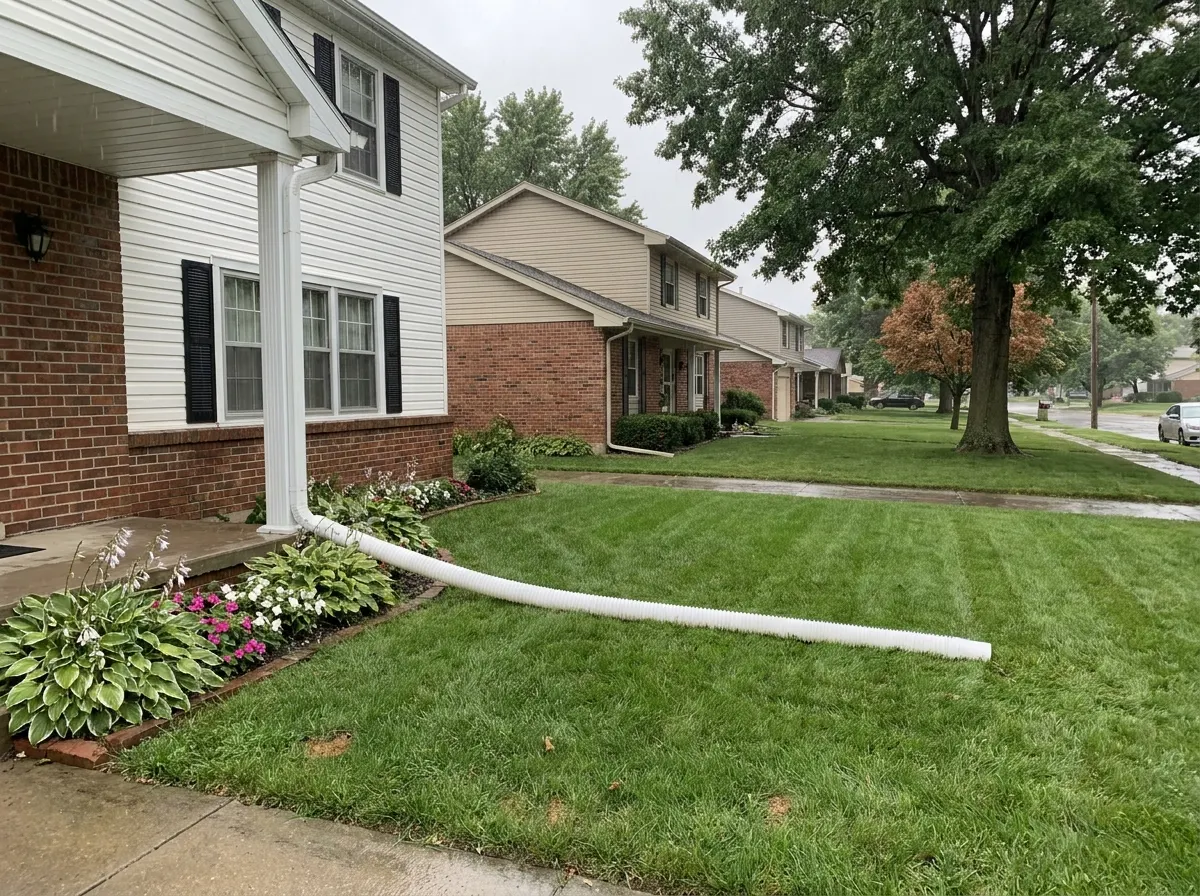
Where the water ends up after it leaves the downspout is also regulated. Roof water has to discharge at least 3 feet from the foundation. If a downspout is within 20 feet of a property line, it has to point parallel to that line, not toward the neighbor's yard.
The city's plumbing code adds that roof drainage cannot go over public property or a neighbor's property. It has to reach a storm sewer or your own yard. Aiming downspouts onto alleys or sidewalks where runoff can freeze is against code. And downspouts can never be tied into the sanitary sewer. The city can order that connection removed and bill the property owner for the work.
The city's own stormwater program suggests turning downspouts toward grass, garden beds or a rain garden rather than hard surfaces.
Seamless gutters and what the installation usually involves
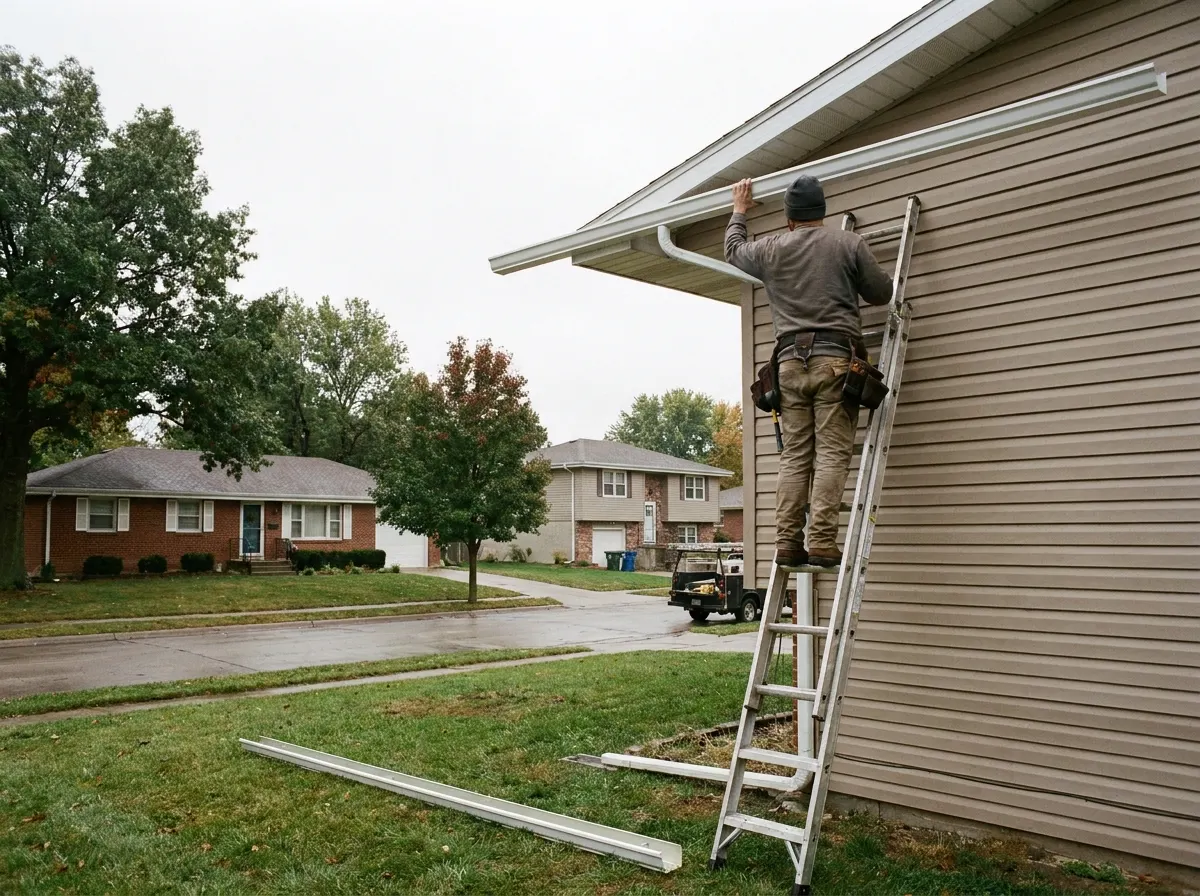
Many installers offer seamless gutters, made in one piece for each run, and a contractor can explain the material and style options. Downspouts connect at the corners or wherever the run ends and carry water down and away from the house.
A contractor will look at the roofline, the pitch, the number of stories, the length of each run and where downspouts can realistically discharge before recommending a size and layout. Fascia condition matters too, since gutters attach to it.
Worth knowing: the City of Omaha lists "Soffits and Gutters" as its own residential permit type. Ask your installer whether your specific job requires one before work starts.
Water is pouring over your gutters and heading straight for your foundation.
Every heavy rain sends a sheet of water cascading off the edge. You can see the soil washing away right below the roofline.
New gutters and gutter guards keep water moving where it belongs. A good local roofer handles the whole job, start to finish.
Talk to a Local RooferYour call goes straight to one of the top-rated roofers in the Omaha area, free quote, no pressure. Call (402) 999-0111
A note on gutter guards
Gutter guards are covers or inserts designed to keep leaves and debris out of the channel so water can still flow through. They come in several styles, and no single type works perfectly in every situation.
Keeping gutters clear does matter. The Nebraska Department of Insurance says clearing debris from gutters helps prevent ice dams by letting meltwater drain. But the University of Minnesota Extension points out that ice dams are caused mainly by heat escaping from the house into the attic, not by clogged gutters alone. Gutters and guards do not solve an insulation or ventilation problem. If ice dams have been an issue, it is worth having someone look at the attic as well.
What affects the cost
A contractor will factor in the linear footage of gutters and downspouts, the height and accessibility of the roofline, the material chosen, whether old gutters need to come down first and the condition of the fascia they attach to. Gutter guard installation adds to the scope if that is part of the project.
Choosing a contractor
The Nebraska Department of Insurance and Nebraska Attorney General suggest getting more than one written estimate, not signing a contract right away and not paying the full amount upfront. Never pay in cash. Check that the contractor's vehicle has the business name and phone number on it.
Nebraska requires contractors to register with the Nebraska Department of Labor, which you can search at dol.nebraska.gov. The state notes that registration does not ensure quality of work or protect against fraud. The local BBB of the Midwest Plains has an office in Omaha and is another place to check before you hire.
Leaks or ice dams at the roof edge? See roof repair in Omaha.
Frequently asked questions
Does a gutter job in Omaha need a permit?
The City of Omaha lists "Soffits and Gutters" as its own permit type, so some jobs do require one. Ask your installer before work begins, and get the answer in writing.
My downspout is close to the fence line. Does that matter?
It does under Omaha's code. If a downspout is within 20 feet of a property line, it has to discharge parallel to that line, not toward the neighbor's yard. A contractor can show you how the layout would work before installation.
Will new gutters stop ice dams?
Gutters that drain freely help meltwater run off before it refreezes, and the Nebraska Department of Insurance says clearing debris from gutters is one step toward preventing ice dams. But the University of Minnesota Extension says the main cause is heat escaping from the attic, so gutters alone are not a complete fix.
Ready to stop worrying every time it rains?
Call now or fill out the form and get connected with one of Omaha's top-rated roofers today.